
Graveyard Keeper 2 Items & Materials Guide — Where to Find Everything
Where to find every material in Graveyard Keeper 2 — forest and swamp nodes, the iron mine, farming, fishing, corpse resources — and the stations that refine them.
FAQ
Where do you find iron in Graveyard Keeper 2?
Can you pin recipes in Graveyard Keeper 2?
Where do you get clay and sand in Graveyard Keeper 2?
What are bricks used for in Graveyard Keeper 2?
Where do you find materials in Graveyard Keeper 2?
Materials come from four places: the land, the water and soil, the dead, and the shops. You chop trees into logs and sticks, mine rocks for stone, marble, sand, clay and ore, farm crops and draw well water, and harvest blood, fat, bones and organs from the dead. Vendors sell anything you cannot gather yet.
The official store page frames the loop the same way: you “harvest as much flora, fauna, and human remains as you can” to build machinery, automate production, and expand the graveyard. In practice that splits into the resource families covered below — wood, stone and clay, ore and metal, crops, liquids and reagents, and corpse byproducts — each feeding its own crafting stations.
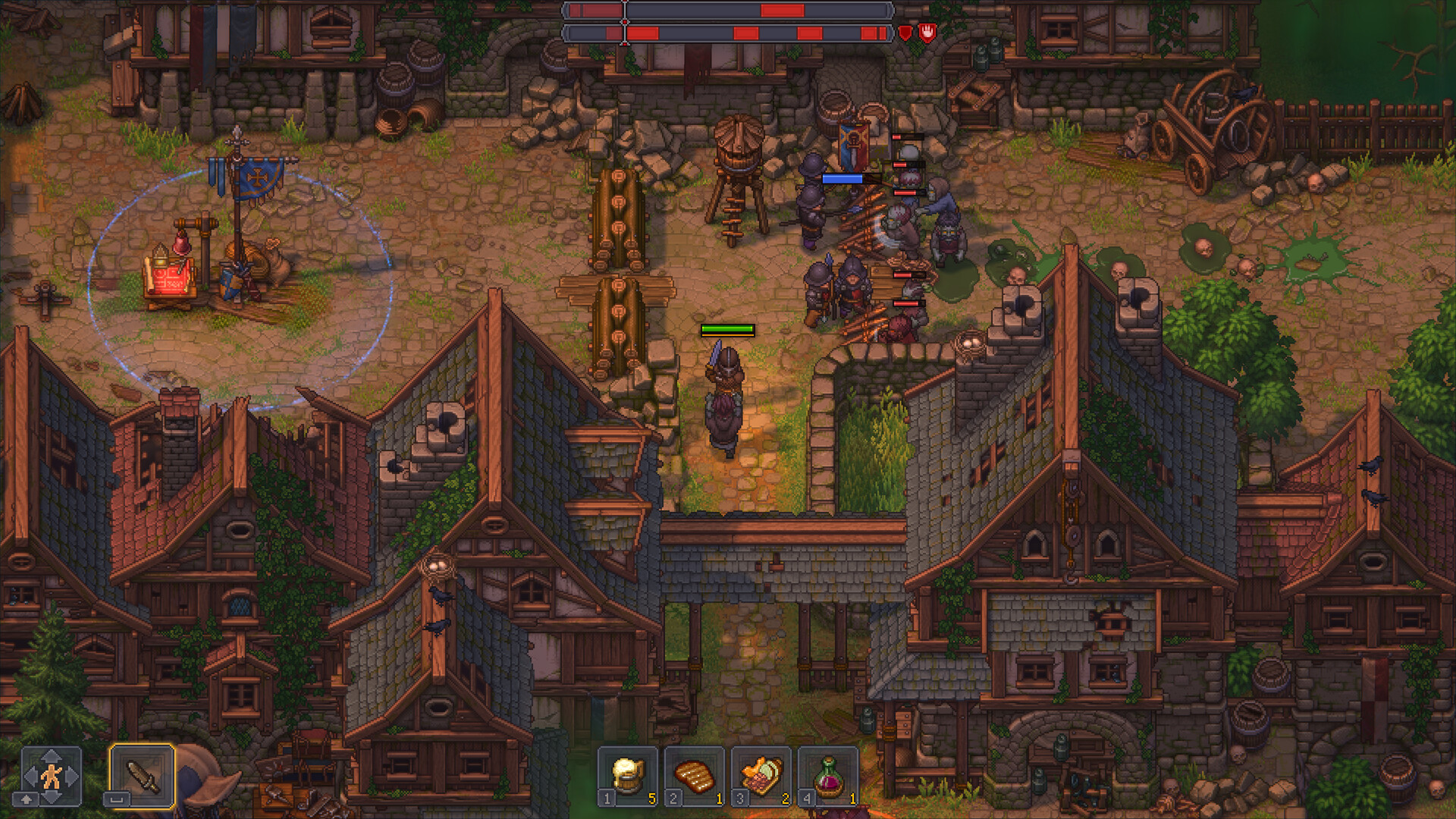
One HUD note before the tables: the red, green and blue counters at the top of the screen are technology points, not materials — they are spent in the tech tree to unlock the very stations that refine your resources. Energy (blue lightning) and the insanity meter are your personal limits, and the thumbs-up counter is gratitude, the town-trust currency.
Which resource locations are confirmed so far?
Players have mapped the early regions fairly consistently: the starting village and its Garden hold trees, loose rocks and your first workyards; the forest west of the village holds the surface mining nodes and the iron mine entrance; and the swamp is the other iron-rich area. The Town itself is where you buy and sell rather than gather.
| Region | What players have confirmed there | Notes |
|---|---|---|
| Starting village & Garden | Trees (logs, sticks), small stone rocks, garden beds, the well | Your first workyards and the sawhorse live here; upgrading the well lets it draw water for you to collect later |
| Forest (west of the village) | Surface mining nodes — player reports mention stone, marble, sand and clay, plus the iron mine entrance | “The iron mine is in the forest, west of the village” has been repeated by multiple players |
| Swamp | Iron ore nodes across the surface | Players note the nodes look like copper deposits but give iron |
| The Town | Vendor shops, the warehouse (weekly orders) | Buy what you cannot gather; sell what you overproduce |
| The Mine (underground) | An effectively unlimited iron node once unlocked | Zombie miners work it after the associated quest chain |
The mine deserves its own note because nothing in the game signposts it clearly. Multiple players have documented the same route:
How the zombie-powered iron mine unlocks (player-reported route)
- Progress the story and win your first battle to open the forest zone where zombies live.
- Head to the south of the forest and find the two vagabonds there (players say one is called Hank).
- Complete their quest to obtain explosives.
- Use the explosives on the mine entrance to the north.
- The easy-to-miss part: clear the blockers on the path leading to the mine from the underground factory area — players report this is what unlocks the zombie-miner technology, not the explosives themselves.
Once running, the mine pairs with the zombie automation system: diggers and quarry zombies fill chests, and porter zombies haul the output — but only if chests and a supply station actually exist for them to serve (more on that below).
What is every material used for?
Almost nothing is junk. The community’s single most repeated advice since launch has been to hoard everything, because nearly every material feeds a later recipe — blood for potions, fat for crafting, bones and skulls for burial work and beyond. The table below groups the raw materials into families with their main sources and destinations.
| Material family | Key items | Where it comes from | What it feeds |
|---|---|---|---|
| Wood | Logs, short logs, sticks, boards, planks, beams | Trees everywhere; sawing stations refine them | Building, chests and storage, fuel, tool handles |
| Stone & marble | Stone, cut stone pieces, marble | Mining nodes around the village and forest | Gravestones, fences and graveyard decorations (grave rating) |
| Clay & sand | Clay, sand | Digging nodes in the forest region | Pottery and bricks from clay; glass from sand |
| Ore & metal | Iron ore, copper nuggets, tin, bronze / iron / steel ingots | Surface nodes in the forest and swamp, the iron mine, panning sand | Ingots, then tools, weapons, armour and machine parts |
| Crops & forage | Wheat, carrots, cabbages, onions, pumpkins, grapes, berries | Garden beds, farming, foraging | Meals, drinks, seeds, and goods for town orders |
| Liquids & reagents | Well water, milk, peat, brimstone, salt | The well, animals, swamp deposits | Cooking, drinks, alchemy |
| Corpse resources | Blood, fat, bones, skulls, organs | Corpses processed at the morgue and graveyard | Alchemy, burial quality, zombie crafting |
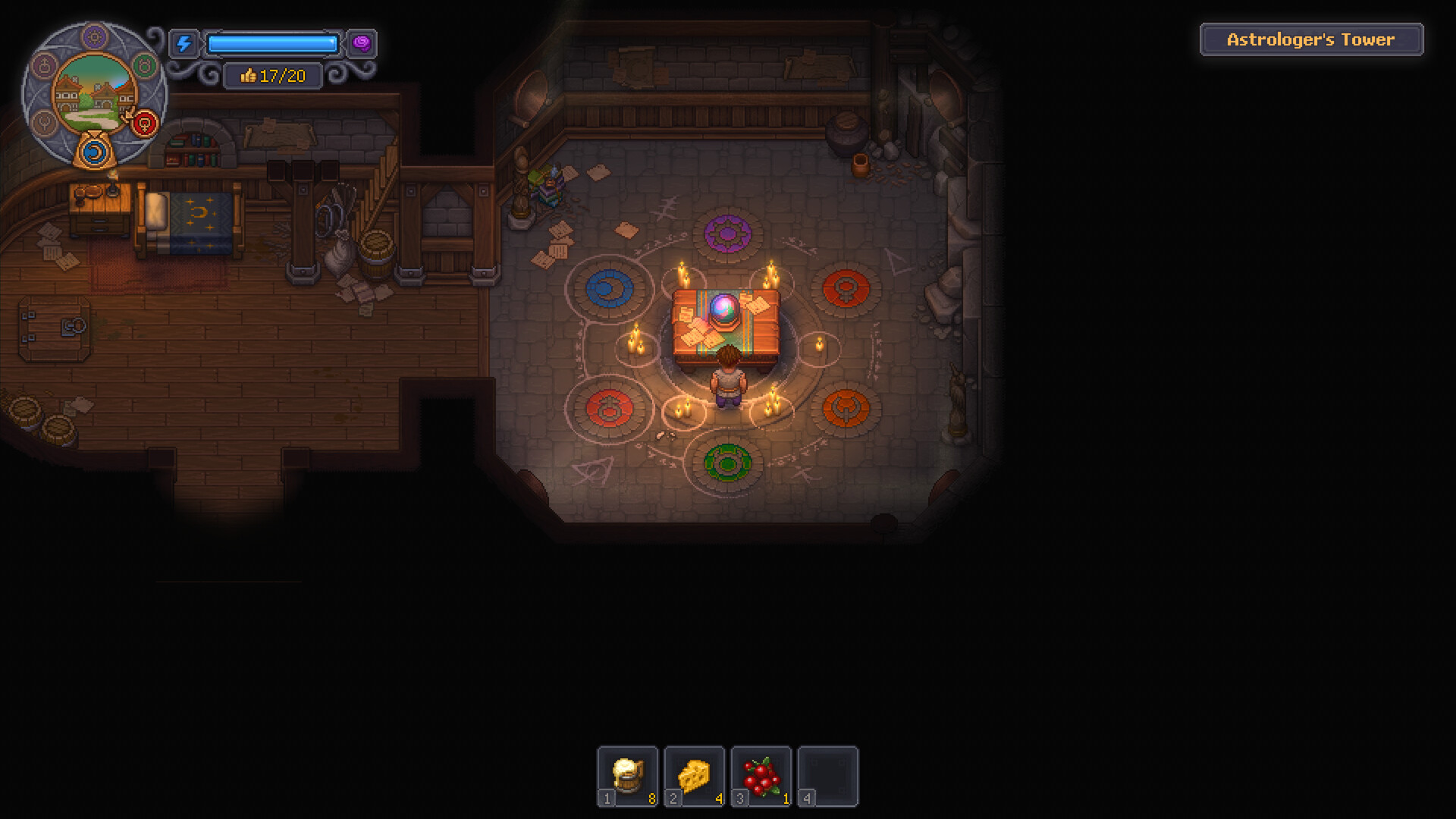
Bricks deserve a special mention. Restoring the Town eats through them constantly, and players rebuilding the settlement describe bricks as the resource every later build wants more of — which is exactly why the community treats them as a long-term stockpile. If you see a kiln in your early tech tree, stockpile its output.
How do recipes work in Graveyard Keeper 2?
Recipes unlock through the tech tree and are crafted at named stations: a sawhorse cuts logs into boards, a potter’s wheel and kiln turn clay into pottery and bricks, a furnace melts ore into ingots and sand into glass. A recipe needs the right station, the ingredients, fuel where heat is involved, and enough tool mastery.
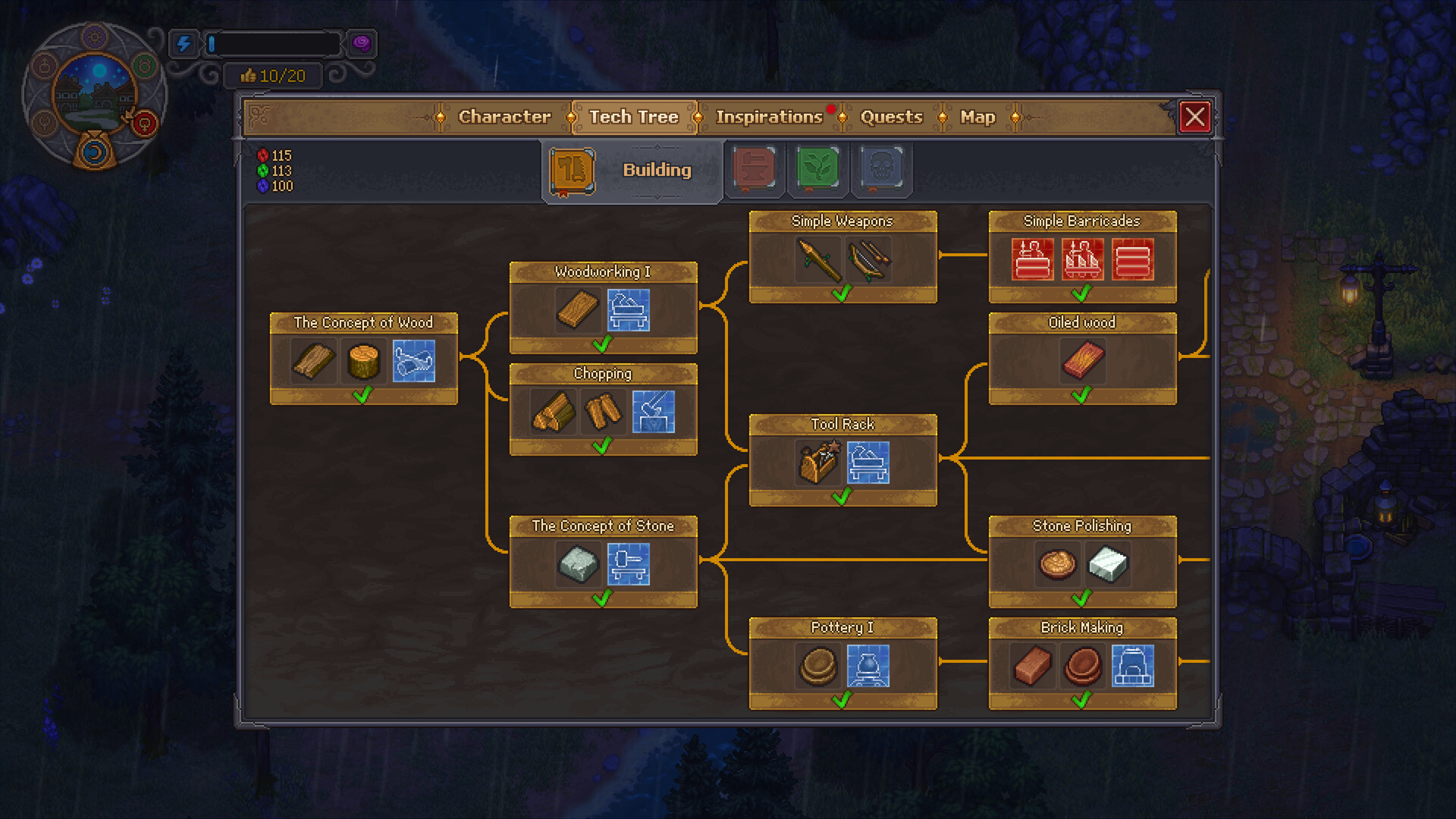
Some stations also need an extension before certain recipes appear — the tech tree’s tool rack line exists exactly for that. The station list below follows the structure community dataminers documented from the launch demo, which covered hundreds of recipes across the crafting stations. The groups have held up in the full game; exact ingredient quantities have shifted with balance patches, so treat this as a map, not a cheat sheet.
| Station family | Stations | Typical products |
|---|---|---|
| Woodworking | Chopping spot, sawhorse, circular saw, woodworking workbench | Firewood, boards, planks, beams, rods and wooden tools |
| Stone & clay | Stonemason’s workbench, potter’s wheel, kiln, sluice box | Cut and polished stone, marble work, pottery, bricks, panned metal |
| Metalworking | Furnace, anvil, jewelry table | Ingots, glass and bottles, tools, weapons, armour, jewelry |
| Textiles | Spinning wheel, weaving loom, sewing table | Flax thread, fabric, clothing |
| Paper & writing | Paper press, writing desk, printing press | Paper, ink, notebooks, books |
| Cooking | Millstone, kitchen table, kitchen oven | Flour, dough, meals |
| Drinks | Vine press, wine barrel, fermentation barrel, brewing stand, distillation cube | Juice, wine, beer, alcohol, spirits |
| Alchemy | Formulation bench, bioreactor, compost pile | Runes, potions, organ improvers, compost |
Where do you actually see recipes in game? On each crafting station’s menu, and in the alchemy recipe book. Two quality-of-life facts worth knowing:
- Update 1.005 added craft-lock icons — pending zombie crafts now clearly show when the zombie’s skill level is too low for the recipe, instead of silently waiting forever.
- There is still no vanilla recipe pinning. The most-requested quality-of-life feature since launch is the ability to pin a recipe and track its ingredient checklist; on PC, the community’s quality-of-life mod pack (Shopping List, part of the Steam “Quality-of-life mods” guide) now does exactly that, and the request threads keep growing. Until it ships officially, players track multi-step orders the old way — pen, paper, and a chest labeled per project.
Tool mastery is the other gate. Every tool family (axes, pickaxes, chisels, rods and so on) has mastery levels, and higher-tier recipes refuse lower-tier crafters — the same rule that governs which jobs a zombie can hold, which our zombies section covers in depth.
How does alchemy use materials?
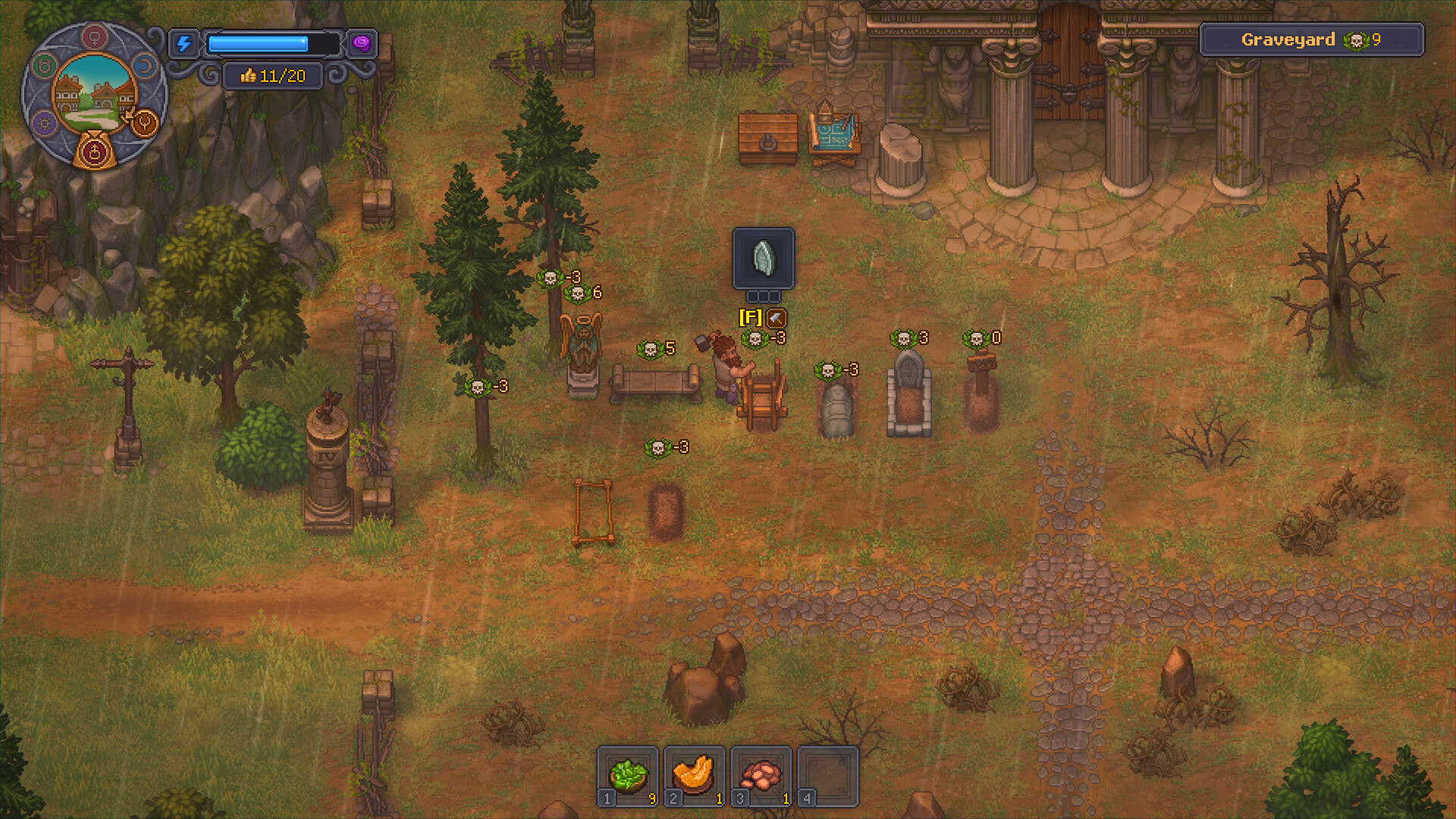
Alchemy is where the corpse and plant sides of the economy meet, and the sequel simplified it dramatically: instead of the first game’s powders, solutions and extracts, ingredients are reduced to red, green and blue runes at the alchemy stations, and an invalid combination simply refuses to mix — so experimenting wastes nothing.
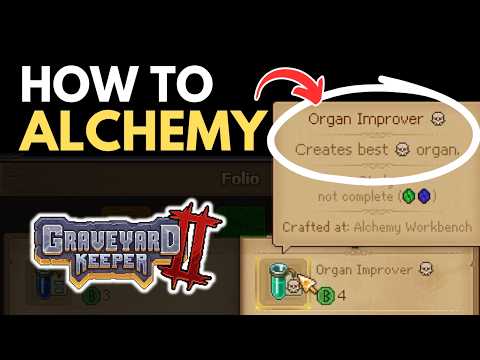
How Alchemy Works in Graveyard Keeper 2 (Organ Improver Potion!?) — Recreational Suffering
The community has compiled working recipe lists across two laboratory tiers — paint, spices, damage and healing potions, berserker and zombie motivator brews, growth elixirs, organ improvers, preservative, and at the top end the philosopher’s stone, which players report turns iron into gold. The list is one dedicated player’s compilation rather than official documentation, so verify costs in your own build before planning an economy around it.
Which materials should you automate first?
Flax is the community’s consensus first automation target: one garden zombie, one assembler, wheel power and a porter cover the whole chain without the crate logistics that vegetables demand, and it feeds the weekly town orders. Wood and stone follow — and here the launch-week trap is logistical, not technical.

How to Get Zombies to Gather Stone, Marble + Lumber in Graveyard Keeper 2 — Recreational Suffering
A digger or quarry zombie will happily mine clay or stone all day, but its output goes nowhere until two things exist: a chest for the resource to land in, and a zombie supply station feeding the porters. Players who skipped both watched their digger shuttle back and forth while the porter idled — and assumed the system was bugged. Place the chest, place the supply station, and the hauling starts on its own. The full job-and-tool system, including which zombies suit which stations, is in our zombies guide.
What are items worth when you sell them?
Vendor prices are not published officially, and they are not flat: most goods pay less the more of one item you dump on a single trader, though Update 1.006 explicitly made static-price trade goods keep a fixed price. Spread big sales across several shops, and treat any silver figure you read as a snapshot.
For the broader earning picture — certificates, the warehouse order system on Sun-Day, and which finished goods outperform raw materials — our guides hub collects the deep dives, including a dedicated money-making guide. Raw materials are almost always worth more after one pass through a crafting station, so when in doubt, refine before you sell.
And when your storage chests are overflowing and the Town is rebuilt, the long game continues in the achievements list — by then, the Keeper who labeled every chest and never sold a single brick will find that discipline paid for itself.
Related videos


Related Articles
achievements
Graveyard Keeper 2 Achievements Guide — Full Checklist & Missables
All 38 Graveyard Keeper 2 achievements with unlock conditions, the five hidden ones, global unlock rates, and an honest look at what is actually missable.
guides
Graveyard Keeper 2 Beginner Guide — Your First Days in The Town
A launch-week starter route for Graveyard Keeper 2: what to do first, which day unlocks what, how faith and insanity work, and the GK1 habits to unlearn.
guides
Graveyard Keeper 2 Corpse & Autopsy Guide — Best Bodies & Red Skulls
How the autopsy system works in Graveyard Keeper 2: organ swap rules, the Oops Surgeon inspiration trap, embalming fluids, grave rating, and red-skull zombies.
Was this helpful?
Thanks for the feedback!