
Graveyard Keeper 2 Money Making Guide — Best Ways to Earn Silver Fast
The best ways to earn silver fast in Graveyard Keeper 2: early-game certificates, the port paint trade, town warehouse orders, and endgame alchemy loops.
FAQ
What is the fastest way to make money in Graveyard Keeper 2?
How do warehouse orders work in Graveyard Keeper 2?
Do merchants restock their money?
What is gratitude used for?
What sells for the most in the late game?
How do you make money fast in Graveyard Keeper 2?
Sell what the town lacks: burial certificates from your graveyard work, paint crafted from free well water, and goods requested by the town warehouse. The port merchant’s paint trade is the community’s favorite early earner at roughly 2 silver per unit, while late-game players profit from high-tier alchemy goods like philosopher’s stones and gold rings.
Graveyard Keeper 2 only launched on September 23, 2026, so every price below comes from community reports on Reddit, Steam discussions, and launch-week videos rather than official documentation. The game has already been patched once (Update 1.006, September 25), and Lazy Bear Games will likely keep tuning the economy — treat the numbers as a snapshot, not gospel.
| Method | Stage | Effort | Reported income | Reported by |
|---|---|---|---|---|
| Burial / cremation certificates | Early | Low, repeats with each corpse | Gold certificates: ~5 silver each | Steam discussions |
| Paint trade at the port merchant | Early–mid | Low, very repeatable | ~2 silver per unit | Multiple Reddit threads + video |
| Town warehouse orders | Early–late | Weekly deliveries | Silver + 10 gratitude per order | Reddit order guides |
| Weekly sermons | Early–late | One sermon per week | Scales with graveyard quality | Steam + Reddit |
| Restored town shops | Mid | Low, weekly batches | e.g. berry pie ~44 copper each | Steam discussions |
| Philosopher’s stones | Late | Low, daily loop | ~35 silver each | Reddit (single detailed report) |
| Gold rings | Late | Medium (mining + smithing) | ~75 silver each | Reddit (single report) |
What do you actually need silver for?
Less than you’d expect in the first hours. Seeds, a few tools, and quest-related purchases cover the early expenses, while the real money sinks appear later — endgame steel purchases and hiring mercenaries for your zombie squads. Because nearly every merchant restocks funds daily, there is no need to hoard coin; sell what traders want, when they want it.
That framing matters because several veteran players argue money is deliberately easy to farm in this sequel — the real bottleneck is faith and time, not silver. Keep a reliable income loop running in the background and spend your attention on corpses, zombies, and the church instead of chasing every last copper.
What is the fastest way to earn silver in the early game?
Bank certificates before anything else. Every body you bury — or burn in the crematorium — produces a death certificate you can sell for coin, and cremation keeps your graveyard from filling up while still printing paperwork. Combine that with your weekly sermon, which pays more as your graveyard rating climbs, and you have a dependable, low-effort income floor.
| Income source | How it works | Notes |
|---|---|---|
| Burial certificates | Bury corpses, sell the paperwork | Players report selling them at the tavern |
| Cremation certificates | Burn bodies at the crematorium | Frees graveyard space and still pays |
| Weekly sermons | Preach once per week | Payout scales with graveyard quality |
| Small sales (fish, firewood) | Occasional top-ups | Mentioned in launch-week video guides |
The graveyard itself is worth investing in for income reasons alone: the better its rating, the more your Sunday sermon pays out. If you are just setting up your plot, our beginner guide walks through the first days, and the items overview explains how selling and vendor stock work.
How does the paint trade work?
Paint is the community’s favorite launch-week money printer: draw free water from your well, craft it into paint at an alchemy station, then sell it to the merchant in the port area for roughly 2 silver apiece. Players report his price barely drops as you sell, so a 100-unit stack nets around 1.5 gold in one trip.
- Draw water from your well — it costs nothing, which is why the whole loop is nearly pure profit.
- Craft paint at your alchemy setup. Reports differ on the exact recipe (some players describe combining water with water, others two units of water via green runes, others two leaves) — check what your station offers.
- Take the paint to the merchant in the port area of town. Players report his exotic-goods shop opens after you finish his quest.
- Sell the whole stack. The reported price decay is tiny — on the order of one copper per unit sold — unlike most other goods.
- Repeat. Water restocks for free, so this loop never runs dry.

How to make infinite Money and Gratitude in Graveyard Keeper 2 — Sinxi
The same water economy supports other products once you progress. A popular one-minute guide describes turning water into glass, then into alchemy flasks — stacking up to 99 — and trading them with an NPC for a sizable payout. The principle is identical: convert a free renewable resource into a crafted good that sells far above its input cost.
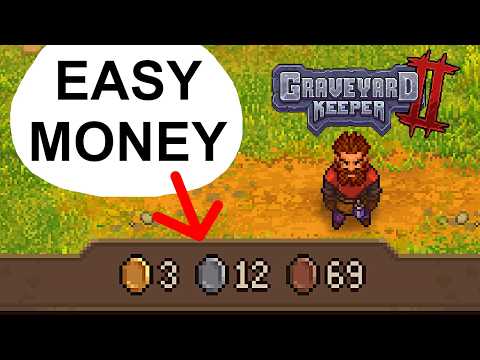
The Easiest Money Method You Missed | Graveyard Keeper 2 — Wasting
How do town warehouse orders work?
The warehouse is your weekly contract board. On Pride Day — the day marked with the sun icon — you pick up to two orders, then have the whole week to deliver goods such as 5 cloth, 5 iron, or 5 building materials. Completed orders pay silver plus 10 gratitude each, and gratitude from orders is capped at 20 per week.
- Visit the warehouse board on Pride Day and choose your two orders. You can reselect freely that day; after Pride Day ends the choice is locked for the week.
- Produce the requested goods during the week — cloth, iron, building materials, whatever the board asks for.
- Drop deliveries into the crates at the warehouse. There are two drop points: the ground floor, and a basement connected to your tunnels — players report zombie porters can haul crates along that route automatically.
- Collect your payment and gratitude from the board once the order completes. Most players can collect immediately; some report the first week’s payout only becoming available on the next Sun-Day.
- Do not start an order you cannot finish — undelivered orders are sold off at week’s end with your progress lost. “Urgent” orders must be completed before the next Pride Day.
The same rhythm applies to the warehouse every week, and you can re-select the same order type week after week. Once your zombie workforce is running, order fulfillment becomes largely passive — see zombies and automation for how to set that side up.
How do you earn gratitude (and what is it for)?
Gratitude is the town-trust resource that rides on top of silver. You earn it by completing warehouse orders (10 each, capped around 20 per week) and by selling items a trader wants — typically 4-5 gratitude per liked item. Players also report buying gratitude at the village tavern when available, and it feeds your weekly faith and sermon routine.
The clever trick: traders stock goods that other traders want. Buy what one vendor sells, carry it to whoever is short, and collect gratitude on the resale — several players run this buy-and-resell loop every morning before the shops restock. Just watch the weekly gratitude cap; anything you earn beyond it is wasted, so time your generosity before your Sunday sermon.
What sells for the most silver in the late game?
Endgame money is alchemy and jewelry. One detailed report describes buying rune powders from the apothecary and selling philosopher’s stones back to the alchemist for about 35 silver each — up to roughly 70 silver per day once her funds refresh. Gold rings reportedly fetch about 75 silver, and a maxed-out nun turns spare corpses into 5-silver gold certificates.
The philosopher’s stone loop works because the alchemist’s daily funds refresh even though they are limited — you cannot dump infinite stones on her in one day, but you can return tomorrow. Jewelry follows the same logic: two gold ore make an ingot, the ingot becomes a ring, and the vendor who sold you the ore reportedly buys it back for several times what you paid him. Since these are single-report numbers, expect some variance.
How do town prices and merchant funds work?
Every trader runs a small economy of their own. Sell too much of one item and the price slides toward a floor; buy in bulk and prices climb. Merchant funds are limited but reportedly refresh each day, so the winning rhythm is small weekly batches spread across restored shops rather than one giant dump.
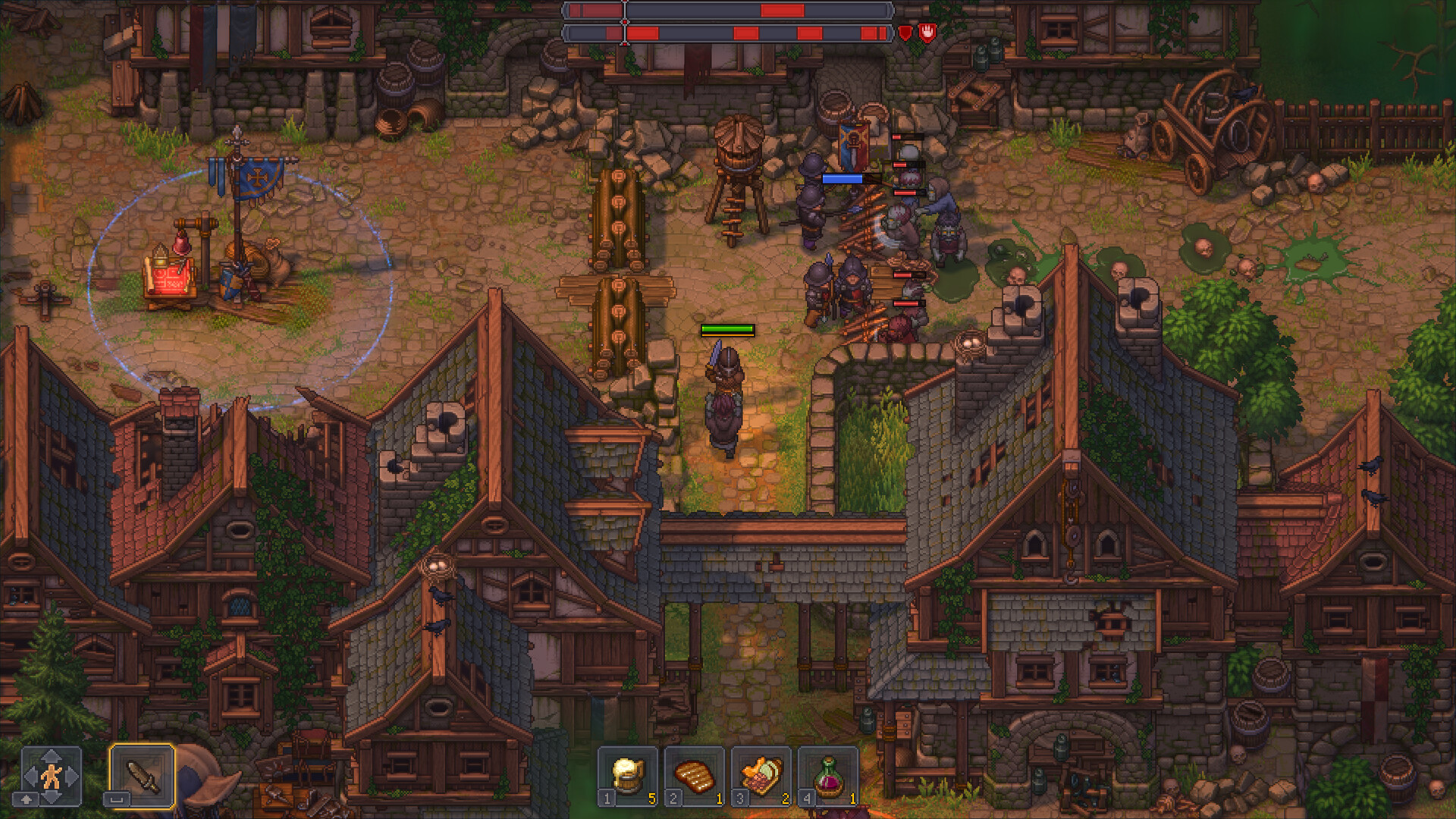
Restoring town shops is itself an income investment: each rebuilt shop becomes a weekly buyer for specific goods. One player reports selling two berry pies to the barkeep for about 44 copper each every couple of days, with the price dropping if you push more. Processed goods generally beat raw materials — clay becomes plates, and each processing step adds value — though some raw goods like firewood sell fine on their own.
More small-change habits that add up
- The anatomy route: an anatomy inspiration perk reportedly pays you a few coppers each time you extract an organ — chance-based, but it adds up if you autopsy every corpse anyway.
- Sell firewood, not bricks: players who tried selling bricks found the firewood they consumed was worth more sold directly.
- Fish and firewood for seed money: launch-week video guides list small fish sales and firewood as the humble top-ups that keep your seed purchases going.
- Watch vendor stock: greyed-out items in a shop’s buy list are usually what that vendor purchases — check every new shop you restore.
Should you grind silver at all?
Honestly? Only as needed. Long-time players point out that faith — fueled by gratitude — gates your perk progression far more than silver does, and coin cannot buy time or automation. A healthy paint-and-orders routine that covers seeds, steel, and mercenary costs is enough; the rest of your week is better spent on corpses, zombies, and the church.
In practice that means one honest session per in-game week: craft a stack of paint, drop it at the port, fill your two warehouse orders, preach your sermon, and move on. When you reach the alchemy endgame, upgrade that routine with philosopher’s stones or rings and you will never feel poor again — without turning the game into a second job.
Related videos

Related Articles
guides
Graveyard Keeper 2 Beginner Guide — Your First Days in The Town
A launch-week starter route for Graveyard Keeper 2: what to do first, which day unlocks what, how faith and insanity work, and the GK1 habits to unlearn.
guides
Graveyard Keeper 2 Fast Travel Guide — How to Unlock All Waypoints
How fast travel works in Graveyard Keeper 2: unlocking the milestone pillars with faith, every confirmed waypoint location, activation costs, and carrying tips.
guides
Graveyard Keeper 2 Town Orders & Trading Guide — Fulfill Warehouse Orders
How to unlock the Town Warehouse in Graveyard Keeper 2, accept supply orders on Pride Day, deliver the right supply boxes, and earn silver and Likes every week.
Was this helpful?
Thanks for the feedback!